Authentic Vintage Football Sweatshirts: Trusted Shops, Verification Tips That Protect Your Purchase
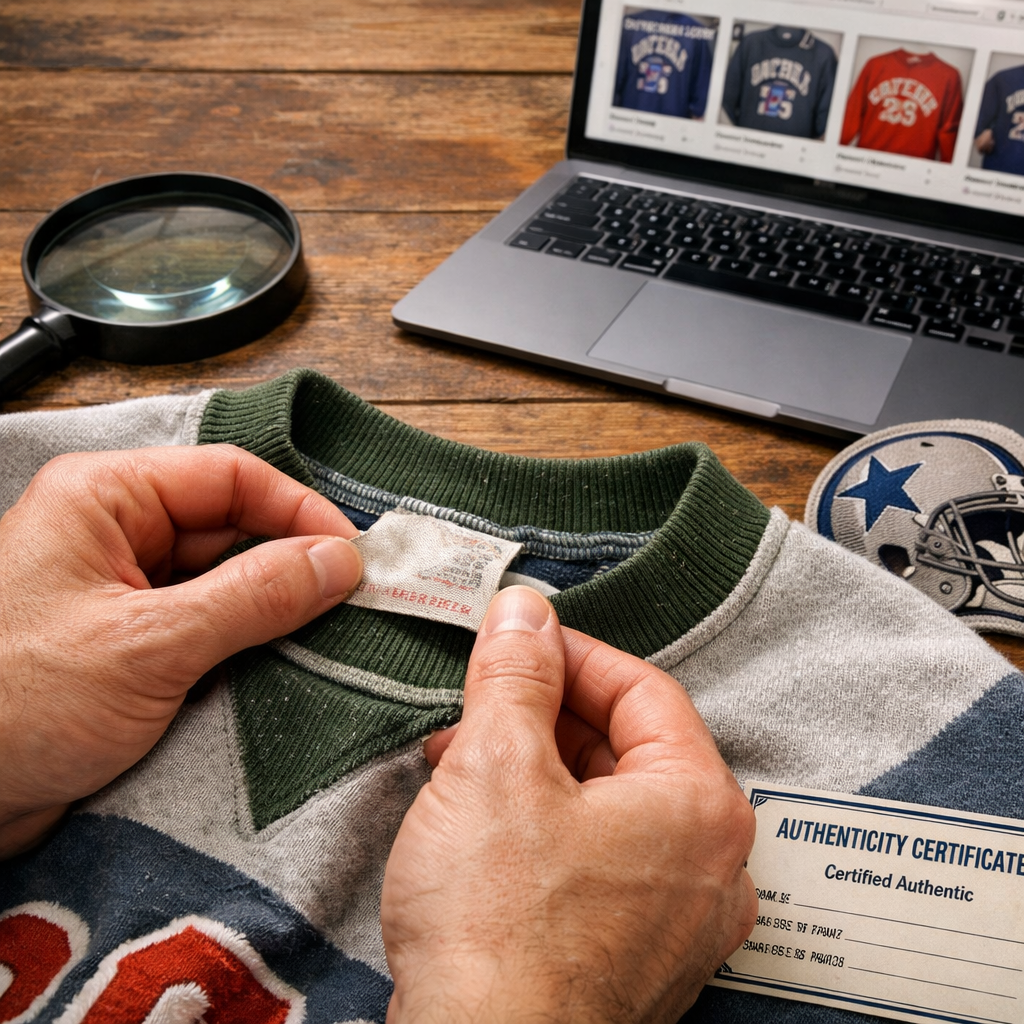
Authentic Vintage Football Sweatshirts: Trusted Shops, Verification Tips That Protect Your Purchase
If you’re hunting for authentic vintage football sweatshirts with old-school logos, start with official and authorized sources, then apply a quick authenticity check before you buy. Demand for retro club graphics is surging, which draws in counterfeits and unknown sellers. This guide ranks the safest shops, shows you how to verify tags and stitching in minutes, and explains how Fan Gear Finder spotlights licensed listings, verified drop alerts, and safe, best‑price checkout routes.
Why authenticity matters for vintage football sweatshirts
Nostalgia is booming and counterfeits are chasing the trend. Kit authenticity advocates warn that imitation vintage football tops are increasingly flooding online marketplaces as styles like blokecore surge, raising counterfeit risk and buyer confusion (see this industry note on the flood of fakes). Blokecore blends retro football crests, sponsor graphics, and 90s-inspired fits with denim, trainers, and everyday streetwear. It’s about wearing classic club iconography off-pitch—oversized sweats, track tops, and scarves styled casually—rather than match-day cosplay.
Trust can be uneven across sellers. For example, VintageFootball.shop shows around “2 out of 5” on Trustpilot, with both five‑star praise and one‑star scam claims; Trustpilot marks some reviews as “Verified,” but doesn’t independently fact‑check every experience, so review quality varies (see the Trustpilot profile, including verification notes).
“Authenticity” means the garment was produced by the original brand or licensee in the stated era, carries period-correct marks/labels, and has verifiable provenance. Modern counterfeiters use sophisticated labeling and printing, so your methods must evolve—combining label checks, code lookups, and side‑by‑side image comparison—with expert guidance where needed (see this practical authentication guide).
Where to shop with confidence
The safest path to authentic vintage football sweatshirts follows a simple hierarchy: official team and league shops first; brand flagships and heritage lines next; then authorized retailers with written guarantees; specialist vintage retailers with documented provenance; and finally, marketplaces that enforce rigorous checks. Third-party experts consistently note that buying direct from a brand or its official store is the most reliable route to authenticity (see these expert buying tips). Fan Gear Finder maps this hierarchy for you, prioritizing official and authorized sources in results.
Follow this five-step flow before choosing where to shop:
- Is it an official club, league, or brand site?
- Does the page include a written authenticity guarantee and clear returns?
- Are reviews consistent and attributable to real buyers?
- Will the seller share close-up label and seam photos on request?
- Does the price align with the market for similar verified pieces?
A quick market reality: secondary channels increasingly drive commemorative and nostalgia-led sales, which concentrates demand and accelerates sellouts of heritage drops (see this analysis of football fashion nostalgia).
Fan Gear Finder
Fan Gear Finder is your verification-first layer. We aggregate official team and league shops, brand flagships, and authorized retailers, and surface licensing cues, return-policy clarity, and direct-to-checkout links—so you see trustworthy inventory and safe value in one view. See our latest verified listings and tools on Fan Gear Finder.
Key features:
- Real-time drop-tracker feeds for sideline and heritage releases; when stock flips to live, we show status and route you straight to the official checkout.
- Price and availability comparisons across authorized sellers, highlighting legitimate clearance opportunities without sacrificing authenticity.
- Licensing and policy callouts so you can confirm holograms/serials and hassle-free returns before you click buy.
Turn on email/SMS/app notifications—both in Fan Gear Finder and at your favorite team and brand stores—to catch limited runs before they spike on resale. For signed items, we route to authenticated channels like Fanatics Authentic when available. Get alerts and follow teams/brands via Fan Gear Finder.
Official team and league shops
Official team and league shops are baseline-trust options for current heritage capsules and some throwback stock. Buying from brand-run storefronts remains the most reliable path to authenticity, and product pages often display licensing holograms or serial tags you can cross-check (see these authenticity-shopping tips).
What to check before purchase:
- A clear return/exchange policy and explicit authenticity guarantee.
- Accurate “throwback” or “vintage” collection labels versus “retro reissue” copy.
- Notification sign-ups for restocks and limited heritage drops.
An official shop is a storefront owned or directly operated by the club/league or its exclusive licensee, with contractual rights to produce and sell licensed goods.
Brand flagships and heritage lines
Brand-owned channels—think Umbro, adidas, Nike—regularly release heritage capsules and retro remakes that sell out fast as nostalgia demand stays strong (see the football nostalgia market analysis; also note the broader boom in classic shirts reported by The Guardian). Retro is a modern remake of an older design, while vintage is an original-era piece—materials, tags, and wear should reflect its time (see this vintage vs. fake explainer).
To secure drops at retail:
- Use brand notifications and drop calendars to avoid resale markups.
- On product pages, check era notes, materials, and authentication marks (e.g., holograms/serials) and keep receipts/screenshots for records (see expert shopping guidance).
Authorized retailers with clear guarantees
When you’re not buying direct from a team, league, or brand, prioritize authorized retailers that publish authenticity guarantees and transparent return policies. Clear guarantees and thoughtful curation build long-term trust—far more than hype-first tactics (see Vogue’s sourcing advice).
Quick trust checklist:
- Prominent “authorized retailer” status or written authenticity guarantee.
- A documented return window and refund method.
- Willingness to provide close-up labels, inside seams, and provenance details on request.
Specialist vintage football retailers
Curated vintage sellers can be excellent—just validate their claims. Many source across WhatsApp, Instagram, Facebook groups, and buying trips, which makes rigorous checks essential (see Vogue’s guide to sourcing). The best specialists publish authenticity guarantees and offer refunds or even free returns if an item proves non-genuine (see this practical authenticity guide for what to look for).
Ask for:
- Macro photos of tags, crests, stitching, and country-of-origin labels.
- Era-appropriate product/style codes for post‑2000 items when applicable.
- Notes on restoration (e.g., re-pressed namesets), since opinions vary among collectors.
How to verify a vintage football sweatshirt before you buy
“Provenance” is the documented history of an item—ownership, acquisition source, and supporting evidence—used to establish authenticity and value.
Use this five-step checklist:
- Inspect stitching and inside seams; uneven, loose, or off-color stitching is a red flag (expert tag/stitch tips here).
- Examine tags/labels for holograms, serials, and font accuracy; confirm country of origin against brand guidance (see these authentication tips).
- For post‑2000 items, look up the product/style code with the manufacturer; pre‑2000 often lack codes, so rely on era-specific tells (see the fake-spotting guide).
- Compare crests, prints, and placements to verified images from official sources and respected collectors.
- Treat far‑below‑market prices as warnings—pause and request more evidence.
Vintage vs. retro: vintage is an original-era garment; retro is a modern remake of an old design (succinctly explained in this collector-focused guide).
Provenance and documentation for higher value items
For investment-grade and game-worn pieces, raise the bar. Photo-matching—aligning wear patterns, stitching, or marks to known match images—is the gold standard for game-worn authentication, and high-value purchases should come with enhanced provenance documentation (see this jersey authentication guide). Many brands and platforms now use digital IDs, RFID chips, or blockchain-style logs to strengthen traceability and fight counterfeits (see this brand-protection overview).
Request this evidence:
- High-resolution tag/label images plus any serials/holograms.
- Chain-of-custody records, receipts, or auction listings.
- Photo-match packets with timestamps and match references where applicable.
Common red flags that signal risk
Watch for:
- Mixed or inconsistent seller reviews and repeated “not as described” claims.
- Prices that sit well below comparable verified listings.
- Reluctance to share close-ups or provenance; many unverified profiles or reviews.
With demand surging, brand-protection crackdowns and investigations have intensified—transparency in sourcing is effectively the resale market’s currency (see this industry perspective on rising counterfeits).
Safer payment and return practices
Reduce financial risk at checkout:
- Use secure payment methods with buyer protection; consider escrow for higher-value items. Avoid irreversible transfers with first-time sellers.
- Get written authenticity guarantees and clear return windows; some specialists explicitly offer free returns if an item is deemed non-genuine (see the authenticity guide noted above).
Return-policy checklist:
- Return timeframe and exact refund method.
- Who pays return shipping and how to obtain a label.
- The process for authenticity disputes and how decisions are documented.
How Fan Gear Finder reduces risk and speeds trusted checkout
Here’s how Fan Gear Finder helps you buy smarter and safer:
- Consolidates official and authorized listings with licensing cues and transparent return-policy callouts in one place.
- Monitors brand/team calendars and pushes verified drop alerts; shows live availability and routes you directly to official checkout.
- Compares prices and clearance across authorized sellers to surface real value without compromising authenticity.
Enable notifications and follow your favorite teams and brands so you can grab limited runs before they hit riskier secondary markets. Where relevant, we integrate paths to authenticated autograph inventory via Fanatics Authentic.
Price and availability: how to compare without getting burned
Use this at-a-glance framework:
| Shop Type | Typical Price Behavior | Trust Signals |
|---|---|---|
| Official team/league shops | MSRP; occasional member-only promos/restocks | Licensing holograms/serials; robust returns; direct brand or licensee checkout |
| Brand flagships/heritage lines | Fast sellouts; limited-time capsules | Branded authentication marks; drop calendars; receipts and order histories |
| Authorized retailers (curated) | Competitive; legit clearance/seasonal deals | Written authenticity guarantee; transparent returns; responsive seller support |
Market cues: secondary markets dominate commemorative and retro sales, causing scarcity spikes and quick sellouts of nostalgia-led pieces (see this deep dive into football nostalgia). Fanatics has also entered the certified vintage space with rare, historically significant items—adding a trusted high-end channel for collectors (see this report on Fanatics’ vintage expansion). Fan Gear Finder surfaces these authenticated paths when they’re available.
Rule of thumb: prioritize verified sources; if a price is far below comparable verified listings, treat it as a red flag and demand more evidence before you buy.
Care and preservation tips for vintage sweatshirts
- Hand wash cold with a pH‑neutral detergent; avoid bleach. Air‑dry flat, out of direct sun, to prevent cracking and fading of prints.
- Store folded with acid‑free tissue; skip wire hangers to protect shoulders and stitching.
- After cleaning, photograph labels, prints, and any wear. Keeping dated condition photos builds a provenance trail for future resale or insurance.
Frequently asked questions
How can I quickly authenticate a vintage football sweatshirt?
Start with tags, labels, and stitching, then compare crest and print placement to verified images. Use Fan Gear Finder’s verified listings or look up the style code for post‑2000 items, and if the price is unusually low, pause and request more photos.
What is the difference between retro and true vintage?
Retro is a modern remake using an old design from brand heritage lines; true vintage is an original-era piece with period-correct materials, tags, and natural wear—rarer and typically priced higher.
What photos should I request from a seller?
Ask for inside seams, size and brand tags, any holograms/serials, country-of-origin label, and macro shots of the crest/print, plus full front and back images to check placement.
Are low prices always a red flag?
Not always, but prices far below comparable verified listings are strong warnings. Compare against Fan Gear Finder’s verified listings, verify codes and tags, and confirm authenticity guarantees and returns before buying.
How should I store and care for vintage sweatshirts?
Hand wash cold with a gentle, pH‑neutral detergent and air‑dry flat. Store folded with acid‑free tissue in a cool, dark place to protect prints and stitching, avoiding long-term hanging.