Get Custom Matching Team Shirts Fast: Reliable Group Ordering Without Stress
Get Custom Matching Team Shirts Fast: Reliable Group Ordering Without Stress
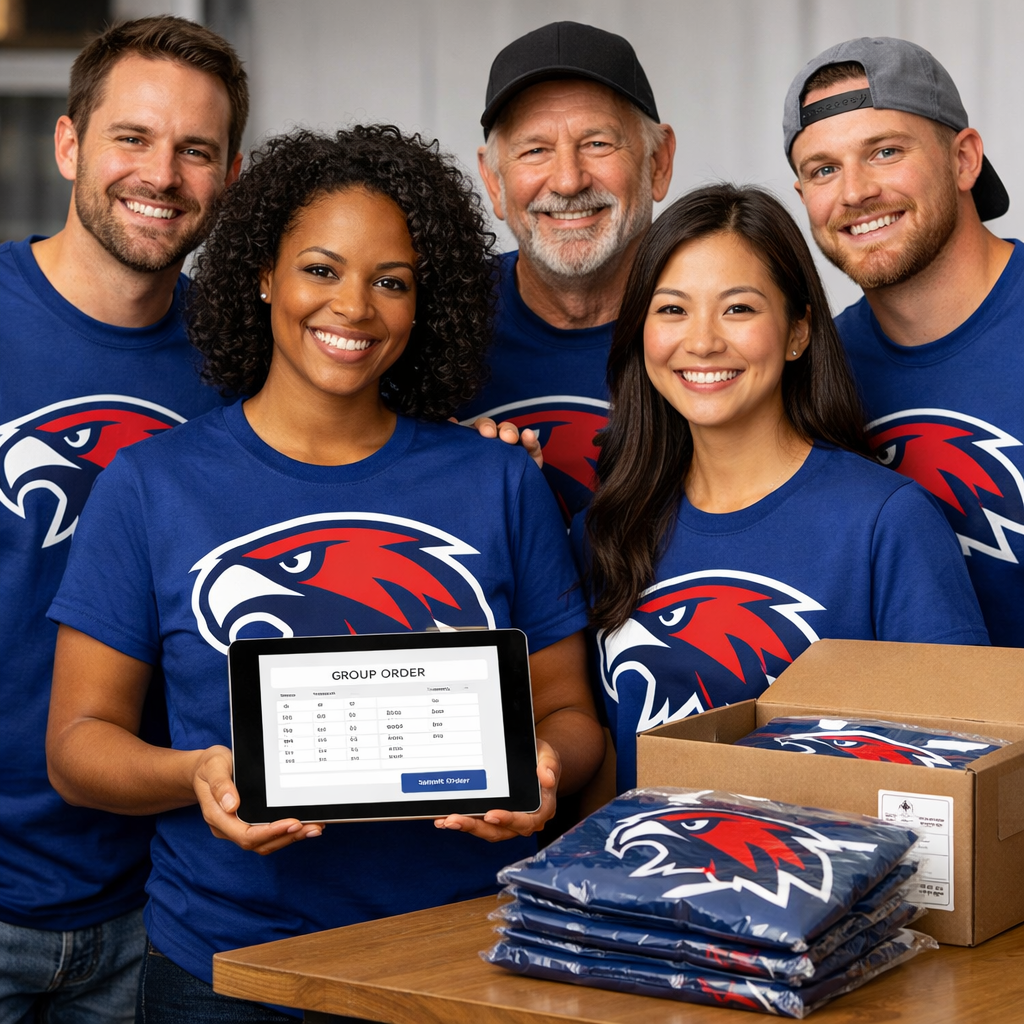
Coordinating matching custom team shirts for a group is absolutely doable—and faster than you might think. Modern platforms make group shirt ordering simple with live design previews, shared links to collect sizes, and rush printing when deadlines loom. Whether you need no-minimum shirts for a small roster or a multi-location rollout, you can lock in timelines, control costs, and reduce stress by following a clear playbook. Below, we break down how to choose the right print method (DTG, DTF, screen printing, embroidery), plan your bulk order timeline, and keep quality on track—plus how Fan Gear Finder helps you compare officially licensed options, shipping, and prices across retailers in one place.
Quick answer to can I order matching custom team shirts for a group
Yes—group ordering for matching custom team shirts is straightforward with today’s online tools. You can design, preview, and approve proofs in minutes, use no-minimum options to start small, and tap rush production when needed. Online platforms now drive roughly 65% of custom apparel sales, enabling streamlined group features, instant quotes, and predictable lead times, according to this custom apparel market analysis from Maggie Frames. If you’re sourcing licensed team gear, Fan Gear Finder centralizes options and timelines across trusted retailers.
How fast group orders work without stress
Follow this predictable flow to move from idea to delivery without last‑minute fire drills:
- Pick your base style and fabric, then choose the print method that fits timeline and art.
- Upload high-resolution, print-ready artwork; preview placements and scale.
- Share a size-collection link with your group; lock address details early.
- Approve your digital (or physical) proof; confirm Pantone or color targets.
- Check out with the production ETA shown at checkout and get tracking updates as stages complete, a best practice echoed by this guide on common ordering mistakes from UberPrints.
- If your deadline is tight, select rush printing or local pick-up where available.
For licensed team shirts, Fan Gear Finder narrows to in-stock, officially licensed options with stated delivery windows.
Micro-factory, defined: A micro-factory is a compact, tech-enabled production setup that combines on-demand printing, finishing, and shipping under one roof. By minimizing setup and batching, it reduces waste and accelerates fulfillment—some operations ship custom apparel within 48 hours, especially for smaller runs, as highlighted in industry trend analyses.
Digital printing often involves zero setup time and can enable same-day production on select orders when art is ready and stock is on hand, as noted in this overview of trending, on-demand design workflows from DTF IL.
Plan the timeline and add smart buffers
For complex or bulk programs, plan 6–8 weeks ahead to leave room for sampling, proofing, and any corrections—a simple way to avoid rush fees and prevent reorders, per this uniform-ordering pitfalls guide from OLG.
Small runs using DTG or DTF can compress timelines substantially, but always leave time to approve proofs and confirm shipping addresses. Turnaround varies by method and quantity; reputable platforms display estimates at checkout. Fan Gear Finder also surfaces stock status and typical ship speeds from major retailers to help set realistic buffers.
Timeline vs. Complexity (typical ranges)
- Small run (≤24): 2–10 days (DTG/DTF)
- Mid-size (25–250): 1–3 weeks (screen printing/embroidery)
- Large/complex (250+ or multi-location): 4–8 weeks (add sampling and fulfillment setup)
Choose printing methods that match your design and deadline
Screen printing for bold bulk designs
Screen printing pushes ink through stenciled mesh screens onto fabric. It excels with bold, high-contrast artwork and larger quantities because setup costs are spread across volume, lowering per‑unit pricing at scale. Best for team wordmarks, numbers, and simple logos.
Why choose it:
- Lowest per-unit cost on big orders
- Vibrant, durable colors on cotton and blends
- Plan for setup time; each ink color adds cost and time
- Confirm Pantone targets during proofing to avoid mismatches
DTG and DTF for small runs and rush timelines
Definition (DTG): Direct-to-garment uses inkjet technology to print full-color designs directly onto fabric. It’s ideal for detailed artwork, photo-real elements, and small runs because setup is minimal and turnaround is quick.
Digital printing can offer zero setup and even same-day production in some cases—great for urgent events—per industry commentary on trending, quick-turn workflows. Briefly, DTF (direct-to-film) prints to a film that’s heat-pressed onto garments; it handles crisp detail across many fabric types, making it efficient for mixed sizes and multi-garment assortments.
Embroidery for logos and premium looks
Embroidery stitches thread into fabric to create raised, durable logos and text. It delivers a polished, professional look ideal for corporate teams, staff uniforms, polos, hats, and jackets. Best for small to mid-quantity runs and left‑chest or cap placements.
Notes:
- Higher per-unit cost than screen print at large volumes
- Choose heavier fabrics and stable weaves for clean stitch quality
Get sizes right and order a few extras
Standardize fit (unisex or consistent brand sizing) and collect sizes early to minimize returns and last-minute swaps. Order a small buffer—typically 2–5% extras—to cover misprints, defects, or new joiners, a tip echoed in this bulk ordering risk checklist from MyNamet.
Simple size-collection checklist
- Name
- Size
- Cut (unisex/men’s/women’s)
- Quantity
- Address (if drop shipping)
Approve samples to avoid surprises
Request fabric swatches and a pre-production sample (physical or high-fidelity photo) to confirm material feel, color accuracy, and logo clarity before full production. A common pitfall is underestimating delivery windows—build sample approvals into your schedule and keep communication active with your supplier to prevent sizing or color issues, aligning with uniform-ordering guidance from OLG.
Artwork checklist
- Upload high-resolution vector files (AI, EPS, PDF) or 300 dpi PNG with transparent background
- Confirm Pantone or CMYK targets
- Review placement and scale on proofs for every size run
Centralize ordering and distribution for multi-site teams
For distributed groups, centralize ordering to maintain accuracy and brand consistency, then stage shipments regionally to cut freight time and reduce shortages—tactics recommended in this playbook for multi-location uniform programs from Scrappy Apparel.
Simple flow:
- Central order portal
- Size-collection links per location
- Unified proof approval
- Staged shipments by region
- Final reconciliation
If you need licensed gear across sites, Fan Gear Finder helps you compare retailers that support regional fulfillment.
Control costs without sacrificing quality
Expect retail pricing for custom shirts to range from about $10–$50 per piece; basic cotton typically lands near $10 per unit, while premium fabrics can reach $20, with labor inputs varying roughly $0.19–$2.10 per garment, according to this custom apparel market analysis. Tiered pricing lowers per-unit costs as volume rises—avoid reprints that erase savings by locking art and samples early.
Quick calculator (example estimates; confirm with your vendor)
- Quantity bracket: 12–24 | Method: DTG | Colors: Full color | Fabric: Cotton tee | Est. per-unit: $18–$30 | Lead time: 2–7 days
- Quantity bracket: 50–150 | Method: Screen print | Colors: 1–2 | Fabric: Cotton or blend | Est. per-unit: $9–$16 | Lead time: 1–2 weeks
- Quantity bracket: 150–500 | Method: Screen print | Colors: 1–3 | Fabric: Cotton or blend | Est. per-unit: $7–$12 | Lead time: 2–3 weeks
- Quantity bracket: 24–100 | Method: Embroidery | Colors: N/A (stitch count) | Fabric: Polos/hats | Est. per-unit: $16–$35 | Lead time: 1–3 weeks
Fan Gear Finder compares per‑item math alongside shipping and fees so you can validate total landed cost before committing.
Sustainability and fabric choices that still move fast
Merch trends point to sustainability, technology, and deeper customization—often with boutique printers outpacing giants on rush responsiveness, per this 2026 merch trends outlook from SLDiv Print. Look for recycled blends, organic cotton, and modern, comfort-first fits (heavyweight tees, vintage washes) that are widely stocked and print-friendly. Personalization demand continues to be led by Millennials and Gen Z, so consider names or numbers that don’t slow production.
Fan Gear Finder
Fan Gear Finder is your impartial hub for group buyers who want officially licensed products across the NFL, NHL, NBA, MLB, MLS, and NCAA—verified by trademarks, licensor/manufacturer callouts, and hologram tagging. We compare prices, per-item math, and shipping options across trusted retailers and help you time buys around promos, markdowns, and limited-release drops. For savings and inventory timing insights (often 10–30% markdown opportunities), subscribe to our newsletter—and see our guide to choosing the best game-day outfit for smart budget moves.
Why licensed team shirts matter for unity and trust
Matching custom shirts build shared identity, cohesion, and brand recognition—your team becomes a mobile billboard—findings reinforced in this overview of how matching apparel boosts brand trust and team unity from Imprint Connect. Uniforms also reduce dress-code ambiguity and promote a sense of belonging, especially for event staff and volunteers, as noted by Retail Minded. When employees feel good in branded apparel, they naturally act as brand ambassadors at events and in public, a theme echoed in market analyses of custom apparel’s role in brand presence.
Licensed gear verification cues to check
- Use Fan Gear Finder’s licensing cues and vetted retailer list to avoid counterfeit risk on group orders.
- Look for official trademarks, league/team logos, licensor/manufacturer callouts, and hologram tags on garments or packaging.
- Cross-check product descriptions and return policies; secure written rights for any custom applications involving protected marks.
Price and shipping intelligence for group buyers
Compare total landed cost per scenario: per-unit price, setup fees, color surcharges, rush add-ons, and regional shipping. Online platforms dominate roughly 65% of custom-apparel sales, offering transparent timelines at checkout and streamlined tracking; combine that with order-proofing best practices to avoid preventable delays. For multi-location programs, weigh centralized bulk production with regional fulfillment to shorten transit and reduce stockouts. Fan Gear Finder consolidates these factors so group buyers can select the best landed-cost path with confidence.
Timing purchases around promos and limited releases
Monitor limited-release drops and sign up for Fan Gear Finder alerts to capture 10–30% markdown windows. When feasible, buy base blanks early and apply decoration closer to the event to hedge against roster or sponsor changes. Keep an open line with suppliers on production and delivery lead times to avoid last-minute surprises.
Frequently asked questions
How long do custom team shirt orders take from design to delivery
Small DTG/DTF runs can ship within 2–10 days; larger screen-printed or embroidered orders often take 1–3 weeks. Fan Gear Finder helps you compare retailer timelines at a glance.
Is there a minimum quantity for group shirt orders
Many styles offer no minimums, so you can start with a few shirts and scale later. Use Fan Gear Finder to filter no-minimum options and confirm any method-specific requirements.
What files do I need to submit for print-ready artwork
Upload high-resolution vector files or 300 dpi PNGs and confirm Pantone or CMYK targets. Fan Gear Finder links to each retailer’s artwork requirements to speed approval.
Can we ship to multiple addresses and still keep the order coordinated
Yes—use a centralized order with grouped size collection and regional fulfillment. Fan Gear Finder highlights retailers that support multi-address or regional shipping.
What happens if sizing or prints are wrong after delivery
Reputable providers reprint or refund for production errors after proof approval. Check the provider’s policy before ordering; Fan Gear Finder links to policy pages for quick review.