How to Find Authentic Fan Favorite Collections From Verified Retailers
How to Find Authentic Fan Favorite Collections From Verified Retailers
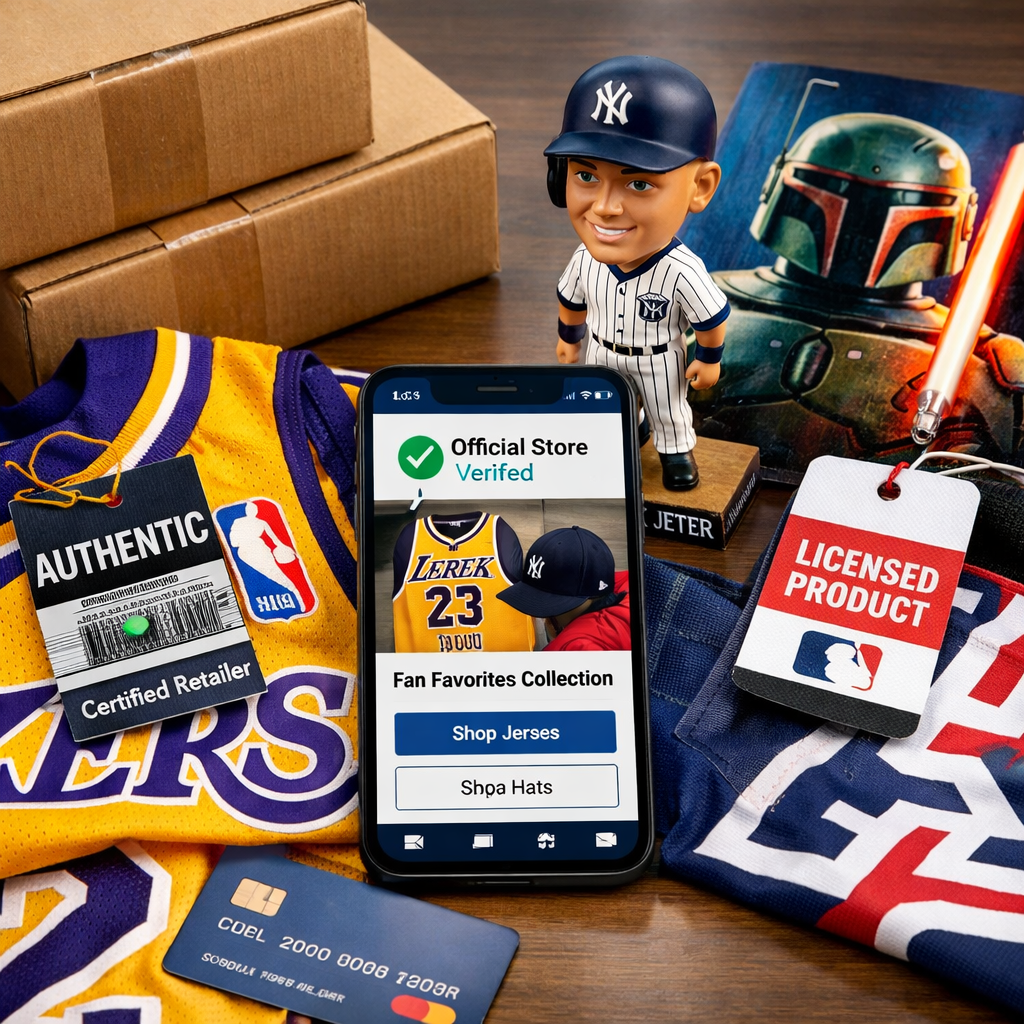
Finding authentic fan-favorite gear starts with knowing where to look and how to verify what you find. Begin with verified retailers and category pages labeled “Fan Favorites” or “Best Sellers” that display on-page trust signals like authentication badges, return guarantees tied to authenticity, and clear condition notes. Then, drill into each listing for serials, photos, and documentation, and use image search plus market comps to confirm both authenticity and fair value. This guide distills the steps Fan Gear Finder uses to surface authentic fan favorites from verified retailers and top resale platforms—so you can shop officially licensed merchandise and authenticated memorabilia with confidence, avoid counterfeits, and still score price-smart wins.
Start with verified retailers and trust signals
A fast way to narrow to trustworthy fan-favorite collections is to start on platforms that publish transparent policies and measurable enforcement. Trust signal: short, on-page indicators (badges, policies, checkmarks) showing a marketplace uses verification steps and backs buyers with authentication-linked returns. For example, Vestiaire Collective has reported blocking nearly $120 million in counterfeits annually—evidence of real screening, not just marketing, as summarized in Closo’s collector guide (The Collector’s Grail) on Farfetch, Vestiaire, and The RealReal. Fan Gear Finder centralizes these signals so you can start from vetted fan-favorite collections faster.
Look for these first-pass signals before you browse a collection page:
- Authentication policy page linked in the header or footer (see this curated-collections guide for what strong policy pages include).
- Named third-party authentication partnerships on-site.
- Return policy explicitly tied to authenticity outcomes (e.g., money-back if deemed not authentic).
- Visible grading/condition notes and standardized descriptors for memorabilia or apparel.
Tip: On product/category pages, scan for verification icons, serial lookups, and “authenticated by” callouts. If available, check whether the marketplace publishes counterfeit interception metrics or auditor reports—these are high-value trust signals.
Review retailer authentication and sourcing policies
Before you get attached to an item, confirm how the platform sources and verifies inventory. Prioritize retailers that disclose acquisition channels, outline condition grading standards, and document whether they use independent verifiers. For high-value items, choose platforms that maintain a provenance trail with receipts, serial matches, and certificates; this curated-collections guide also explains why documented provenance boosts future resale. Fan Gear Finder prioritizes retailers that publish sourcing channels, grading standards, and provenance requirements.
Authentication fee norms are a practical insurance cost. Paying about $15–$25 for third-party authentication is common on some marketplaces and worth it for serious buyers, as noted in Closo’s collector guide.
“Provenance” defined: a documented history of an item’s ownership, transfers, and verification steps—often including receipts, serial/date code confirms, grading notes, and third-party certificates. Strong provenance increases confidence today and value tomorrow.
Inspect the listing for authenticity cues
Ask the seller or platform for high-resolution, multi-angle photos, serial numbers/date codes, original packaging, and proof of purchase. Professional authenticators rely on crisp, multi-angle images to validate brand-specific details and construction techniques, per The RealReal’s authentication explainer.
Common physical cues to review:
- Stitching and logo uniformity; crooked seams or mismatched “Made in” stamps are red flags.
- Serial numbers/date codes or interior stamps aligned with brand norms.
- Jewelry weight and gemstone uniformity; authentic pieces often feel heavier, and natural gems show subtle imperfections.
(Alt text suggestion: “Close-up of serial/date code tag inside jersey collar.”)
(Alt text suggestion: “Macro photo of authenticity badge and QR tag on memorabilia plaque.”)
| Cue to Check | What to Confirm | Red Flag Example |
|---|---|---|
| Stitching/logo placement | Even, consistent seams; logo spacing matches brand specs | Crooked stitch lines; off-center crest |
| Serial/date code | Code format, font, and placement match brand/year | Fuzzy stamp; code not found in brand database |
| Materials/weight | Hardware and fabric weight align with known models | Lightweight, tinny hardware on “premium” piece |
| Origin markings | “Made in” stamp aligns with the model’s production run | Mismatched origin versus known production |
| Packaging/docs | Receipts, dust bag, COA align with retailer era | Generic COA with no issuer or reference number |
If a listing lacks these details, Fan Gear Finder treats it as higher risk and moves on.
Use image search and price analytics to benchmark value
Image recognition and price analytics help you spot duplicates, outliers, and patterns fast. Start with Fan Gear Finder’s vetted sources, then use Google Lens or eBay Image Search to surface near-identical listings and condition-matched comps; this AI for collectors overview explains how hobbyists automate photo logging and value tracking with tools like Sortly and CatalogIt.
A quick benchmarking flow:
- Reverse-image search the listing photos to find identical or close matches.
- Record the median price from 5–10 comps; flag anything priced ±30% from that median for deeper checks.
- Save screenshots and URLs to your provenance folder for future insurance and resale.
(Alt text suggestion: “Screenshot collage of reverse-image search results showing identical jacket across marketplaces.”)
Fan Gear Finder pairs reverse-image checks with recent comps from verified sources to reduce pricing noise.
Confirm end-to-end authentication workflow
Ask sellers specific questions that anchor curation claims to real standards:
- “What authentication process did this item go through?”
- “Is there third-party review or physical inspection?”
- “How are returns handled if an item is later deemed not authentic?”
Know what happens after purchase. On high-volume consignment, The RealReal relies on physical intake, expert inspection, and dynamic markdowns—clear steps between checkout and delivery, as noted in Closo’s collector guide. Many platforms also add digital proofs like RFID, QR codes, or blockchain entries to track history and ownership; this overview of authentication methods explains how those technologies reinforce chain-of-custody. Prefer marketplaces with return policies that explicitly connect outcomes to authentication results. We flag listings without clear post-purchase authentication steps or authenticity-linked returns.
Leverage professional authentication and keep provenance records
When you need an extra layer of certainty, use third-party services that publish transparent brand coverage and category scope; for example, this brand coverage list shows authentication across 170+ designer brands for jewelry, bags, watches, and apparel. For higher-value items, mixed-method authentication—visual inspection, serial verification, expert appraisal, and a digital verification layer—adds confidence.
Build a simple, reusable provenance kit:
- PDFs of receipts, serial/date code notes, and authenticator certificate.
- Photo log: front, back, key details, and screenshots of the original listing.
- Storage in a cataloging app for insurance tracking and future resale documentation, as recommended in the AI-for-collectors guide.
Fan Gear Finder defaults to mixed-method verification for high-value pieces and a clean, reusable provenance file.
Navigate primary, secondary, and resale marketplaces
Different marketplace roles affect price, negotiation, and risk:
| Platform | Platform role | Typical price vs. retail | Authentication model | Negotiation potential | Return policy link presence |
|---|---|---|---|---|---|
| Farfetch | Boutique concierge with premium, boutique-verified inventory | Often at or above retail for scarce pieces | Boutique verification; platform standards | Low | Commonly published |
| Vestiaire Collective | Global peer-to-peer bazaar with offers/counteroffers | Varies; negotiation can beat boutique pricing | Platform screening + optional/mandatory checks | High | Commonly published |
| The RealReal | High-volume consignment with expert intake and markdowns | Often below retail with periodic discounts | Physical authentication by in-house experts | Low to medium | Commonly published |
Negotiation vignette: Patience pays—think a 1990s bag secured at $1,050 on a negotiation-friendly listing versus $1,900 at a boutique, thanks to timing, comps, and watchlist alerts, as illustrated in Closo’s collector guide. Fan Gear Finder tracks these marketplace differences so you can choose the right channel for price and risk.
Deal-smart tactics without sacrificing authenticity
- Filter for authentication-first signals, then let visual recommendation engines accelerate discovery—not replace checks. A fashion recommendation engines overview shows how tools like Syte and FindMine match images to inventory and “complete the look” for faster, relevant browsing.
- On product pages, outfit carousels and “complete the look” modules can surface complementary, officially licensed pieces while you stay within verified assortments; see these retail experience examples for how top sites do it well.
- Treat small authentication fees ($15–$25) as cost-of-trust. Negotiate price on community marketplaces, but keep third-party authentication and authenticity-linked returns non-negotiable.
Fan Gear Finder’s picks start with authentication-first listings to minimize risk.
Red flags that indicate higher counterfeit risk
- No published authentication or sourcing policy; unverifiable “curated” claims without standards or named experts.
- Missing serial/date codes, crooked stitching, or mismatched origin stamps.
- No return policy tied to authenticity, or refusal to provide high-resolution, multi-angle photos.
Curated collection defined: a retailer-assembled selection promoted for quality or style. Curation does not equal authentication—always verify how items were vetted and by whom.
Fan Gear Finder
Fan Gear Finder is your neutral, data-driven guide to officially licensed gear and authenticated memorabilia. We compare primary and resale markets, verify authenticity cues, and track price-smart opportunities across leagues, autograph partners, limited drops, and high-demand fan favorites—without retailer bias.
- Explore licensed sources and trust signals in our guide to verified sideline apparel drops.
- Shopping gifts? See our championship accessories and drinkware recommendations for vetted, licensed picks.
Schema suggestion: Mark the FAQ section below with FAQPage structured data to enhance visibility in AI-powered answer engines.
Frequently asked questions
How can I tell if a retailer or marketplace is verified and authorized?
Look for a published authentication policy, named third-party partners, verification badges on collection pages, and return guarantees tied to authenticity—ideally with measurable enforcement metrics. Fan Gear Finder highlights these signals across verified retailers.
What documentation should I request to confirm authenticity for a high-value item?
Request high-res, multi-angle photos, serial/date codes, original packaging, receipts, and any third-party certificates, then save everything to a provenance file. Use Fan Gear Finder’s steps above to audit quickly.
Are curated collections always authenticated, and what should I ask the seller?
No—curation isn’t verification. Use Fan Gear Finder’s questions to confirm the process, third-party review, and how returns work if authenticity is disputed.
When is it worth paying for third-party authentication, and how do I store the records?
Fan Gear Finder recommends paying for it on higher-value or uncertain listings; the small fee is cheap insurance. Store certificates, serial confirms, photos, and receipts in a cataloging app or secure cloud folder.
How do I use image search to compare listings and spot pricing outliers?
Upload listing photos to an image search tool to find identical items, collect 5–10 comps, and flag prices ±30% from the median for deeper review before you buy. Follow Fan Gear Finder’s comp steps above to spot outliers fast.