How To Spot Authentic College Hoodies And Where To Buy
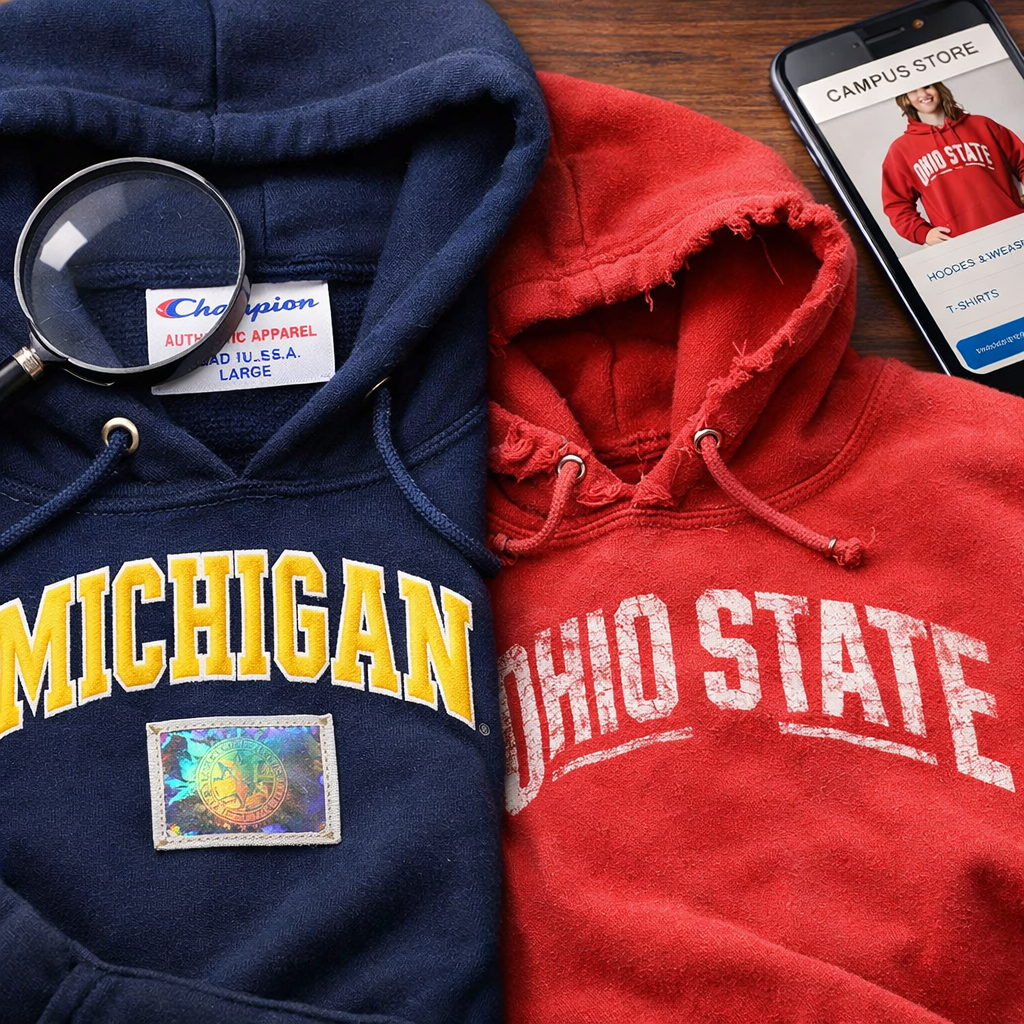
How To Spot Authentic College Hoodies And Where To Buy
A great college hoodie should feel right the moment you pull it on—substantial fleece, clean stitching, and spot‑on school colors. This Fan Gear Finder guide shows you exactly how to legit check a hoodie, then points you to the safest places to buy now. In short: authentic, officially licensed college hoodies protect comfort, durability, and school pride; counterfeits waste money with flimsy fabric, off logos, slow shipping, and messy returns. Below you’ll learn how to verify tags, construction, prints, and seller credibility in minutes, then see where to buy the best university hoodies without overpaying.
Why authenticity matters for college hoodies
Authentic university hoodies are made to spec: they use quality fleece, consistent sizing, and trademark‑accurate logos. Counterfeits often cut corners with thin fabric, sloppy seams, and misprints that fade fast. Officially licensed apparel is produced under a signed agreement with a university, allowing use of trademarks and logos, and is subject to quality controls and royalties to the school.
Counterfeit college apparel is common online, and the best defense is systematic verification of materials, construction, labels, prints, and provenance—ideally using clear, well‑lit photos compared to verified examples, as outlined in the Off-White hoodie real vs fake guide and Locker Room Direct’s guide to spotting fake gear. These same habits form a quick, reliable legit check for any hoodie.
What authentic college hoodies look and feel like
- Tags: Real college hoodies have firm, dense neck tags with crisp, evenly aligned fonts and correctly ordered wash‑tag sequences—tells consistently flagged by high‑end streetwear authentication guides.
- Stitching: Expect tight, uniform stitching with no loose ends. Wider, wavy seams are a common replica giveaway.
- Prints: Logos should lie flat and integrate into the fabric. Overly glossy, puffy, or 3D finishes—especially when paired with neon‑bright inks—are frequent fake tells seen in streetwear spot checks on video.
- Material feel/smell: Authentic fleece lands in a consistent mid‑to‑heavy weight and shouldn’t carry a harsh chemical odor; strong smells, paper‑thin fleece, or scratchy interiors are red flags.
- Fabric weight definition: Fabric weight is the density of the textile (often in GSM or ounces). Heavier weights feel thicker and warmer; authentic collegiate hoodies typically use mid‑to‑heavy fleece that resists pilling and holds print shape.
- Vintage markers: Vintage college sweatshirts often feature classic block lettering, crests, and mascots, with quality fabric and precise stitching; look for period‑correct brand labels and construction cues noted by vintage specialists and retro guides.
Step 1: Photograph tags and prints in natural light
Start with photos that make comparison easy and decisive.
- What to shoot: Neck tag front/back, the full wash‑tag sequence, hangtag with barcode, front/back prints, hood drawcord channel, cuffs/hem, and any holograms or QR codes recommended in general anti‑counterfeit walk‑throughs.
- How to shoot:
- Use daylight by a window; avoid flash glare.
- Take macro close‑ups and full‑garment frames.
- Include a ruler or coin for scale.
- Keep images sharp and level for font/spacing checks.
Step 2: Verify neck tag, wash tag, and hangtag details
Labels are where many replicas slip.
- Fonts and spacing: Compare font sharpness, letter spacing, and alignment against verified references; fakes often use bolder, blurrier, or misaligned type.
- Wash‑tag placement: Check text size and placement; replicas may shift sections higher/lower or compress lines relative to authentic sequences.
- Color anomalies: Unexpected tag colors (for example, unusually light or lime‑tinged neck tags on styles that shouldn’t have them) are a general red flag, a pattern frequently highlighted in streetwear legit checks on video.
- Hangtag barcode check: Ensure barcodes/QRs are scannable and consistent with product details.
- Tip: Size tags help, but they’re not definitive—use them only as supporting evidence.
Secondary cues to search: neck tag verification, wash tag placement, hangtag barcode check.
Step 3: Inspect stitching, seams, and construction
Quality construction is hard to fake and quick to judge.
- What to review: Shoulder seams, side panels, hood drawcord channels, kangaroo pocket edges, and rib cuffs/hem.
- What you want to see: Dense, even stitching with tidy back‑tacks and no loose threads; symmetrical pocket placement; flat, even ribbing.
- Feel test: Squeeze the cuffs and hem for recovery; authentic fleece rebounds and feels consistent across the garment. Paper‑thin, uneven loft or poor recovery suggests a counterfeit or low‑grade blank.
Keywords to apply: hoodie stitching quality, seam inspection, construction check.
Step 4: Assess print quality, colors, and fabric weight
Logos and graphics should look like they belong to the hoodie.
- Flat, integrated prints: Authentic prints sit flush and flex with the fabric. Puffy, overly glossy, or 3D textures—especially paired with overly bright inks—are common fake indicators shown in hands‑on “fake vs real” guides on video.
- Color density and font shapes: Compare hue, saturation, and letterforms to verified examples; mismatched tones and off‑type are frequent replica tells noted in expert guides.
- Vintage context: Many vintage college sweatshirts use block letters, crests, and classic mascots; verify era‑correct brand markers and label styles with reputable retro resources.
- Color density definition: Color density is the perceived saturation and coverage of ink on fabric; authentic prints maintain crisp edges and even, non‑bleeding coverage across the weave.
Step 5: Evaluate seller credibility and pricing signals
Filter risk before you ever add to cart. Fan Gear Finder’s comparisons help you benchmark pricing and licensing claims quickly.
- Seller checks: Confirm licensing info, packaging quality, return policy, secure payment options, and reputation—pillars emphasized in counterfeit‑avoidance guides.
- Price sanity check: Compare across multiple retailers; extreme discounts often signal fakes. As a market anchor, common collegiate hoodies like select Champion Powerblend styles list around $53.99 on a licensed retailer’s sweatshirts page—use ±20% around that for mainstream fleece unless premium or vintage.
- Pre‑purchase vetting checklist:
- Confirm licensing indicators and official logos.
- Scan recent reviews for real‑world photos and mention of tags/fit.
- Cross‑check price vs. mainstream listings within about ±20%.
- Verify clear returns and tracked shipping.
Step 6: Use authentication services when uncertain
When stakes are higher—rare drops, pricey collabs, or secondhand finds—bring in a third‑party verdict.
- What they do: Image‑based legit check services blend human examiners and AI to deliver a determination with reasoning, often within about 48 hours.
- What to upload: Macro shots of neck/wash/hang tags, front/back logos, size stamps, hood badges, and any serials or QR codes, per general anti‑counterfeit guidance.
- If a fake is suspected: Compare photos to verified references, ask the seller for receipts, request a refund, and report the listing to the platform—standard steps covered in consumer how‑tos.
Secondary cues: authentication services for hoodies, legit check service, image‑based verification.
Where to buy authentic college hoodies
If you’re asking where to buy best university hoodies, start with official channels, then expand to licensed retailers, reputable vintage/nonprofit outlets, and verified secondhand marketplaces. Cross‑shop to avoid overpaying and confirm “officially licensed” signals before checkout. You can also compare current stock and prices across licensed sellers on Fan Gear Finder.
| Channel | Authenticity risk | Typical price range | Shipping speed | Return policy confidence | Best for |
|---|---|---|---|---|---|
| Official university/team stores | Lowest | $$–$$$ (~$55–$85) | Fast (2–5 business days) | High | Current-season, exact school marks |
| Licensed collegiate retailers | Low | $$ (~$45–$75) | Fast/standard | High | Broad selection, sizes, deals |
| Premium collegiate brands | Low | $$–$$$ (~$60–$90) | Fast/standard | High | Unique graphics, quality fabrics |
| Reputable vintage/nonprofit outlets | Low–Medium | $–$$$ (~$35–$120) | Standard | Medium–High | True vintage, mission-driven buys |
| Verified secondhand marketplaces | Medium (lower with verification) | $–$$ (~$20–$80) | Varies by seller | Varies (use buyer protection) | Bargains, discontinued graphics |
Reinforce price fairness by comparing across multiple licensed sellers before purchasing. That’s our Fan Gear Finder playbook: pair authenticity signals with cross‑retailer price checks so you don’t miss stock or overpay.
Official university and team stores
Official university/bookstore portals and on‑campus team stores carry current‑season apparel with the lowest authenticity risk and consistent school branding. Expect clear licensing marks, fast shipping, and straightforward returns. Look for:
- University bookstore online portals
- On‑campus team stores
- Official athletic department shop links
For price sanity, compare what you see to licensed retailer listings such as the sweatshirts collection that anchors mainstream fleece pricing. A quick check on Fan Gear Finder helps you confirm you’re in market range.
Licensed collegiate retailers and premium brands
Licensed collegiate retailers offer wide coverage of schools and styles, while premium brands deliver unique, vintage‑inspired graphics across a large and growing roster of universities. Start with Fan Gear Finder to scan in‑stock options and pricing across licensed sellers, then explore broad school selections via retailers like CampusWardrobe’s sweatshirts and hoodies collection, and premium, retro‑leaning designs from Homefield Apparel across over 150 schools. Compare fabric specs, fits, and return terms; as a reference point, select mainstream hoodies list around the mid‑$50s on licensed collections. Use filters for school, logo style (block letters/crests), fabric weight, and shipping ETA.
Reputable vintage and nonprofit outlets
Vintage demand is surging thanks to sustainability and nostalgia. Authentic vintage shows heavier fabrics, precise stitching, and period‑correct brand labels—traits highlighted by vintage university sweatshirt guides and retro specialists. Nonprofit or team‑affiliated outlets often emphasize authenticity checks and educate buyers on tags, packaging, and licensing cues; they typically pair that with transparent return policies. Fan Gear Finder highlights these cues so you can spot true vintage faster.
Safe secondhand purchasing with verification
For used hoodies, request daylight photos of all labels, logos, and any defects, plus receipts or licensing details. If you’re unsure, run an image‑based authentication before paying. A safe flow:
- Ask for photos/receipts
- Compare against verified examples
- Use a legit check service
- Pay with buyer protection
- Inspect on arrival and report issues immediately
Secondary cues: buy secondhand college hoodies, authenticate used hoodies, safe marketplace buying.
How Fan Gear Finder helps you buy with confidence
Fan Gear Finder is a research‑led guide focused on officially licensed college hoodies at fair prices with fast shipping. We compare stock and pricing across retailers, surface availability alerts, and highlight verified sideline drops so you don’t overpay or miss out. Our authentication guidance teaches systematic checks—tags, stitching, prints—and points to trusted channels and image‑based services when needed. We’ve honed this verification rigor while curating official merchandise and authenticated memorabilia with pro‑sports partners, and we bring the same standards to collegiate gear. For more ways to shop smart, see our tips on building a game‑day outfit without overpaying.
Frequently asked questions
How can I quickly tell if a college hoodie is authentic?
Check firm, well‑aligned neck and wash tags, dense even stitching, and flat, accurate prints under natural light; compare photos to verified references and avoid sellers with unclear licensing or unusually low prices. Fan Gear Finder’s checklists and side‑by‑side references make this fast.
What tag or security features should I look for on licensed college apparel?
Look for official licensing marks, correctly placed wash‑tag text, clean fonts, and a hangtag with a barcode or QR code; tags should feel durable and consistent, not flimsy or misaligned. Fan Gear Finder’s tag examples help you match details.
Are discounted college hoodies still authentic?
Yes—if the seller is reputable and licensing is clear. Use Fan Gear Finder to benchmark prices; extreme discounts versus market norms can be a counterfeit red flag.
Is embroidery more reliable than screen print for authenticity?
Neither guarantees authenticity; verify labels, stitching density, print quality, and seller credibility regardless of decoration method. Fan Gear Finder’s process applies to both.
What are the safest places to buy real college hoodies online?
Start with official university stores, then licensed collegiate retailers and premium brands. For vintage or secondhand, use reputable sellers, request detailed photos, consider a legit check, and use Fan Gear Finder to find vetted options.