How to Spot Quality Vintage-Inspired Clothing and Trusted Sellers
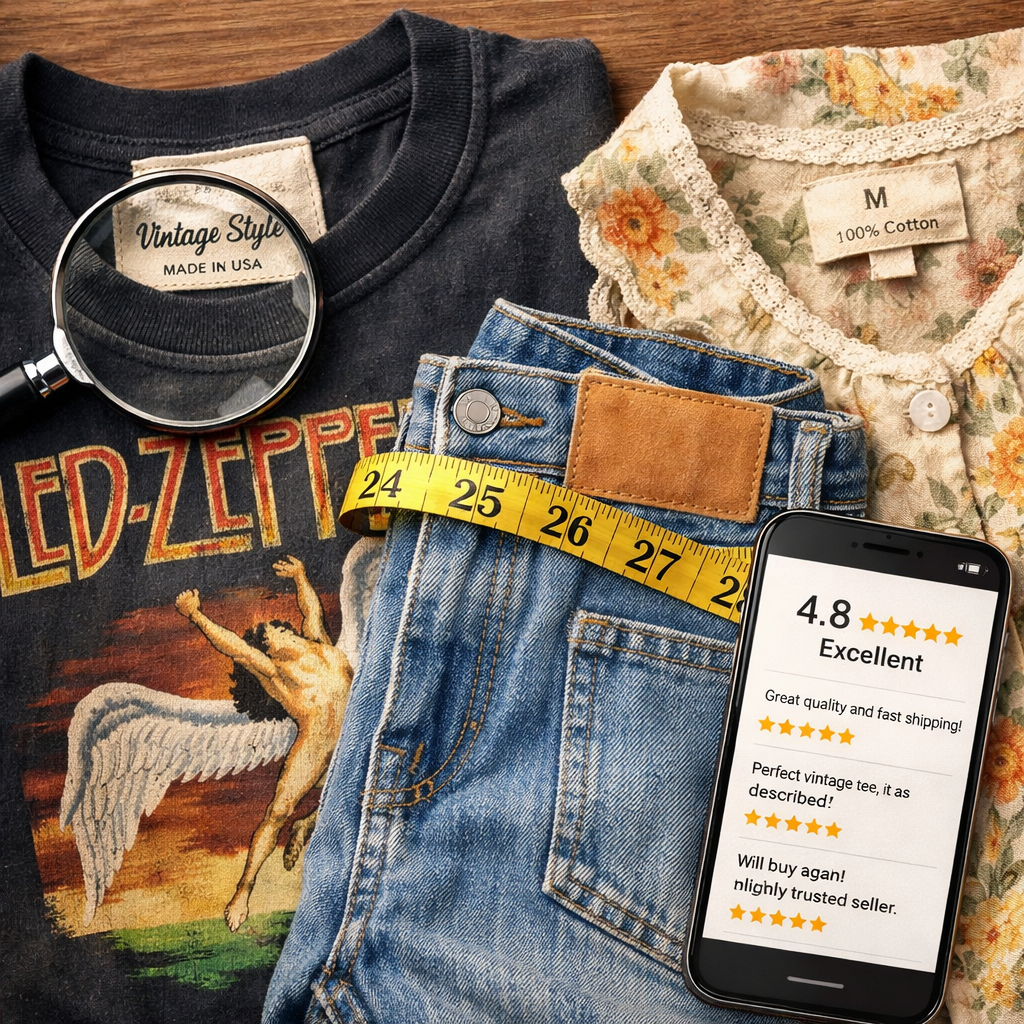
How to Spot Quality Vintage-Inspired Clothing and Trusted Sellers
Vintage style is booming—but quality and authenticity vary wildly across listings. Here’s a crisp, verification-first guide to spot well-made vintage-inspired pieces, distinguish true vintage from reproductions, and zero in on trustworthy sellers. In short: define your target era, inspect fabrics and construction, read labels and numbers, and vet sellers for transparency. For sports fans, Fan Gear Finder streamlines licensed NFL/NHL throwbacks and authenticated memorabilia with cross-retailer checks and fast-shipping filters.
Define your target era and style
“Vintage” typically means garments at least 20 years old; newer items with an old look are retro, while new copies of old designs are reproductions. These definitions help filter listings and expectations (Upright Labs resale guide; MyVintage guide).
Shortlist one to two eras and learn their signatures:
- 1940s tailoring: structured shoulders, wool gabardine, side zips.
- 1970s disco: bold prints, synthetics including thicker early polyester, metal hardware.
- 1990s sportswear: oversized silhouettes, cotton fleece, nylon shells, branded trims.
Focus your search terms on silhouettes, common fibers, zipper placement, and patterns to compare era cues accurately (retro vs reproduction; era dating; 1970s polyester; 1990s sportswear).
Verify fabrics and construction quality
Quality shows up in the hand-feel and the inside of the garment. Natural fibers like wool, silk, cotton, and linen, plus full linings, are strong signals; synthetics surged in the 1970s, and earlier polyester often feels thicker than modern blends (Tuppence Ha’penny dating guide; Roberta Lee label overview). Look for neat, finished seams, pattern alignment at joins, generous seam allowances, and deep hems—hallmarks of careful construction (Upright Labs resale guide; Tuppence Ha’penny dating guide). Prioritize metal zips and natural-material buttons (horn, shell) over flaking plastics; side zips often indicate older manufacture (Tuppence Ha’penny dating guide).
Fabric weight and fiber content
- Feel for heavier weight and dense weaves/knits; this often signals better-quality yarns and construction (Roberta Lee label overview).
- Synthetics expanded in the 1970s; early polyester and acetate commonly have a thicker, more substantial hand than modern versions, which helps avoid misdating (Tuppence Ha’penny dating guide).
Common fibers and era associations:
- Wool, silk, linen, cotton: quality indicators across eras.
- Early polyester, acetate: thicker hand in 1960s–1970s.
- Stretch synthetics (spandex blends): widespread post-1990s.
Seams, stitching, and linings
- Open the garment to inspect the interior: finished seams, straight topstitching, and pattern matching at critical joins indicate care (Upright Labs resale guide).
- Serged/overlocked edges became standard in the 1960s—a helpful era cue when paired with other details (America’s Antique Mall guide).
- Generous seam allowances, deep hems, and fully sewn-in linings are common in older or higher-end garments (Tuppence Ha’penny dating guide).
Hardware, closures, and buttons
- Prefer metal zippers, sturdy snaps, and natural-material buttons (horn, shell, mother-of-pearl); avoid brittle or flaking plastics (Tuppence Ha’penny dating guide).
- Dating cues: metal zips and side zips lean older; pre‑1950s often used side seams, with center-back zips growing later (Tuppence Ha’penny dating guide).
- Button materials timeline: Bakelite (1930s–40s), Lucite (1950s), widespread modern plastics (1960s onward) (Tuppence Ha’penny dating guide).
Read labels, tags, and numbers for dating
RN (U.S.) and CA (Canada) numbers are registry IDs searchable to identify the manufacturer and registration info—useful for confirming timeframe and origin (Ian Drummond Vintage). Examine label shape, typography, union tags, care symbols, lot numbers, and country-of-origin phrasing—these are strong dating signals.
Brand labels and fonts
Use the excellent Vintage Fashion Guild label resource to compare label typography and sub-lines.
Mini label/era quick-reference:
| Label text | Likely era/sub-label note | Why it matters |
|---|---|---|
| Burberrys (with an “s”) | Common on authentic pre-1999 pieces | Name changed to “Burberry” later |
| Valentino Miss V | 1970s–1980s diffusion line | Quality line with collectible value (Roberta Lee label overview) |
| Givenchy Nouvelle Boutique | Mid-century high-end RTW (c. 1960s–80s) | Indicates quality atelier lines (Roberta Lee label overview) |
Union tags, RN or CA numbers
- Union labels (e.g., ILGWU) evolved over decades; designs and colorways help date garments. “Made in USA” tags often suggest pre‑1970s–80s before large-scale offshoring (Ian Drummond Vintage; America’s Antique Mall guide).
- Search RN/CA numbers to identify the registrant and corroborate listing claims (use the U.S. FTC RN lookup for RN searches).
- Lot numbers often indicate 1970s mass-production inventory systems—a supplemental era clue (Ian Drummond Vintage).
Care labels and country of origin
- Standardized GINETEX care symbols appeared around 1963; their presence/absence can refine era placement (MyVintage guide).
- Country phrasing examples that aid dating (America’s Antique Mall guide):
- “British Hong Kong” (pre‑1997)
- “West Germany” (1949–1990)
- “USSR” (pre‑1991)
- “Czechoslovakia” (pre‑1993)
- “Made in USA” often signals earlier production before major offshoring (context-dependent).
Cross-check details with reference databases
Corroborate everything:
- Identify brand label typography,
- Check union/care tags,
- Search RN/CA,
- Compare to era guides and the Vintage Fashion Guild label resource,
- Reassess hardware/fabric signals.
This layered approach reduces risk and improves confidence in both vintage and quality reproductions (Upright Labs resale guide). For licensed team apparel, Fan Gear Finder applies the same layered verification across authorized retailers.
Assess condition, measurements, and fit
Vintage sizing varies widely; always compare a garment’s measurements to clothes you own rather than trusting the tagged size (MyVintage guide). Check for even fading, underarm wear, seam stress, and fabric integrity; small flaws can be acceptable if priced fairly.
Measurement template (flat-lay):
| Dimension | Inches/cm | Notes (e.g., stretch, rise type) |
|---|---|---|
| Shoulder | ||
| Chest/Bust | ||
| Waist | ||
| Hip | ||
| Rise/Inseam | ||
| Sleeve | ||
| Length |
Condition grading and common flaws
- Typical tiers: Excellent (minimal wear), Very Good (minor, inconspicuous flaws), Good (notable wear/repairs), Fair (significant flaws; study photos closely).
- Inspect photos for: discoloration, underarm staining, moth holes, seam stress, shininess from iron burns, replaced buttons/zips. Honest, detailed flaw notes are a trust signal.
- Ask for close-ups of collars, cuffs, underarms, crotch/seat, and hems.
Accurate measurements vs vanity sizing
- Rely on flat-lay measurements and compare to a similar garment; many vintage items run smaller than modern labels (MyVintage guide).
- Confirm whether measurements are doubled or not; note fabric stretch; budget for tailoring on structured pieces.
Fit checklist:
- Jackets/coats: shoulder width, chest, sleeve, body length.
- Pants: waist, rise, thigh, inseam, leg opening.
- Dresses: bust, waist, hip, shoulder-to-waist, total length.
Vet platforms and sellers for trust
Trusted sellers share provenance, multiple high-res photos, condition grades, and measurement charts—consistent markers of credibility (MyVintage guide). Curated marketplaces with authentication reduce risk for rare/designer pieces; see the platforms highlighted in Vogue’s best places to shop vintage online. For licensed sports apparel and memorabilia, Fan Gear Finder aggregates vetted listings and surfaces return policies and shipping speed to simplify due diligence.
Who sells the best vintage-inspired clothes? Look for curated dealers that document era evidence and offer returns; prioritize platforms with vetting/authentication for high-value items.
Listing transparency and photography
- Expect multiple angles and macro shots: brand/union/RN tags, seams/linings, hardware, high-wear areas; photos should be true-to-color in natural light.
- Strong listings cite evidence (“1960s side zip,” “ILGWU tag,” “RN xxxxx”).
- Avoid vague posts with few photos or inconsistent measurements.
Fan Gear Finder highlights listings that clearly show licensing cues like league holograms and official tags.
Provenance, authentication, and returns
- Prefer platforms that authenticate or dealers known for provenance; for museum-level curation and provenance detail, 1stDibs-style dealers are common on lists like Vogue’s marketplace roundup.
- Confirm return windows and who pays return shipping—critical for fit-sensitive items.
- For designer/rare pieces, request receipts, prior appraisals, or archived lookbook references.
Communication and responsiveness
- Ask targeted questions: “Is the label original? What decade and why? Any underarm damage?” Fast, specific replies indicate expertise.
- Request extra measurements or daylight photos; sellers who volunteer care/storage history build trust.
Use Fan Gear Finder for licensed sports vintage-inspired gear
Fan Gear Finder curates officially licensed NFL and NHL apparel and authenticated memorabilia. We emphasize verification-first listings—official tags, league holograms, retailer credibility—and surface fast-shipping options and exclusive sideline-inspired drops with cross-retailer price comparisons.
Officially licensed NFL and NHL apparel
- Look for official league holograms, manufacturer/retailer credibility, and correct team fonts and era-faithful colorways on throwbacks.
- Construction cues for quality retro-inspired team gear: sewn tackle-twill numbers/lettering, crisp embroidery, sturdy zips/snaps.
Quick pre-buy check for hoodies, jackets, jerseys:
- Licensing tag and hologram present
- Accurate team wordmarks/fonts
- Tackle-twill or high-density print quality
- Seller/retailer reputation and return policy
Authenticated memorabilia and verification cues
- Serious collectibles should include serial-numbered COAs, tamper-evident holograms, and searchable registry entries.
- Mini verification flow: locate hologram/COA → verify serial on authenticator database → confirm listing photos match registry details.
Cross-retailer price comparisons and fast-shipping filters
Use Fan Gear Finder’s comparisons to avoid overpaying, snag in-stock sizes, and prioritize quick delivery. Enable price alerts and restock tracking on high-demand throwbacks.
Example comparison table template:
| Retailer | Price | Shipping ETA | Return window | Licensing notes |
|---|---|---|---|---|
| A | $ | Fast (2–3d) | 30 days | League hologram |
| B | $ | Std (5–7d) | 14 days | Official tag |
Exclusive sideline releases and limited drops
We flag limited sideline releases and time-sensitive drops so you can check out fast and at retail.
Quick drop-day checklist:
- Confirm official tags/hologram
- Compare price across retailers
- Verify ship date and inventory status
- Screenshot order confirmation and item details
Build a repeatable inspection checklist
- Feel fabric weight; favor natural fibers and dense weaves.
- Inspect seams/linings for neat finishes and pattern alignment.
- Check hardware: metal zips, quality buttons; side zips often indicate older garments (Tuppence Ha’penny dating guide).
- Read labels: brand/union, RN/CA, care symbols; GINETEX symbols appear around 1963 (MyVintage guide).
- Date via label databases and era guides; confirm country-of-origin phrasing.
- Assess condition with close-ups of high-wear zones.
- Verify measurements vs a garment you own.
- Vet seller/platform: provenance, returns, responsiveness.
Be patient—inventory cycles and rare finds appear over time (Vogue’s buying tips).
Frequently asked questions
How can I tell quality vintage-inspired from cheap reproductions?
Prioritize natural fibers, neat finished seams, and metal hardware. Cross-check labels, union/RN numbers, and era-accurate details like zipper placement, and request close-ups; for licensed sports gear, Fan Gear Finder streamlines these checks.
What labels or numbers help date a garment accurately?
Brand label typography, union tags, and RN/CA numbers are fast verifiers. Care symbols, lot numbers, and country-of-origin wording can further narrow era; Fan Gear Finder surfaces these signals for licensed NFL/NHL gear.
What photos should I request from a seller before buying?
Ask for macro shots of brand/union/RN labels, seams/linings, zippers/buttons, and high-wear zones (collars, cuffs, underarms). For team apparel, Fan Gear Finder flags listings with clear licensing shots and measurements.
How do I handle vintage sizing and ensure a good fit?
Ignore tag size; compare flat-lay measurements to a similar garment you own. Confirm the measuring method and note stretch; Fan Gear Finder also surfaces measurements and return policies on licensed gear.
What are red flags that a seller isn’t trustworthy?
Vague listings, few/blurry photos, inconsistent measurements, or evasive replies. For licensed team gear, Fan Gear Finder prioritizes transparent listings with provenance, condition grades, full measurements, and clear returns.